


Knee osteoarthritis combines two processes: the destruction of cartilage and the growth of osteophytes, or bone spurs.The stages of the process are determined by radiographs.Arthropathy is believed to be the damage to the knee joints that occurs with age and is a natural process of aging.The cause is muscle weakness and poor blood supply to the tissues.How to treat yourself without surgery?Eliminate factors that reduce muscle tone.
reason
Medicine has not determined the cause of joint disease;Only risk factors are listed:Are over 45, have a knee injury and are overweight.Nearly 50% of adults have complained of knee problems.
With joint disease, the cartilage at the edges of the bones wears away or disappears completely.The damaged tissue is not the source of the pain because it has no receptors.Inflammation of nearby structures causes characteristic symptoms.
The body continues to regenerate damaged tissue, but the cartilage grows unevenly.As a result, irregular shapes are formed that damage other elements of the joint.The nature of the osteophytes may be explained by compensatory smoothing of the articular cartilage.Another version suggests Spurs expansionAn attempt to stabilize the joint medially or laterally due to muscle weakness.
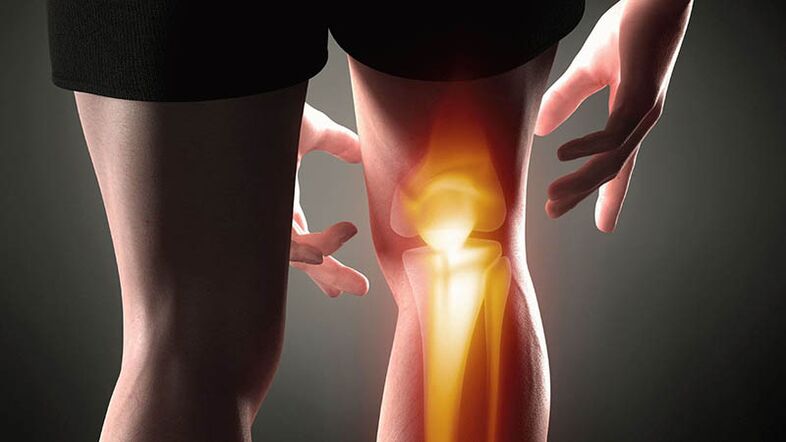
What causes chronic arthritis of the knee joint?Pain in tendons and ligaments only occurs when muscle strength no longer supports and controls the bones.Therefore, there is a distinction between the biomechanical causes of pain and joint disease:
- in the context of prolonged sittingCompression occurs between the inguinal ligament and iliopsoas muscle of the femoral artery and nerve, which weakens the front of the thigh and causes tension in the tendons below the kneecap.
- Sitting for long periods of time can strain your gluteal muscles, weaken them.Instead, the piriformis muscle comes into action and the sciatic nerve passes underneath it.When compressed, the biceps weaken and the angle of rotation of the thigh and calf changes.The knee hurt.
- walking in high heelsThis causes tight calf muscles, rotates the pelvis, and weakens the gluteus medius.The femur rotates inward, loading the ligaments along the medial side of the knee and the medial meniscus, causing osteophytes to grow.
- flatfootIt is associated with wearing uncomfortable shoes, adductor weakness, and increased lordosis, allowing the tibia to rotate outwards, causing knee pain due to compromised biomechanics and the formation of Baker's cyst.
The chain of pathologies affecting the knees is related to falls on the coccyx in childhood, scoliosis due to visceral diseases.People with different shoulder heightsOver time, they begin to complain about their knees, because the fascial chain along the front of the body includes the extensor muscle of this joint - the rectus femoris.
symptom
Degenerative processes impair joint function, causing pain and stiffness.It is believed that this isEffects on muscles begin with cartilage and bone.Practice shows just the opposite -Knee pain occurs in tendons– Weak muscle attachments of the knee extensors, flexors and stabilizers.
Key signs of the threat of cartilage wear:
- Occasionally you will feel discomfort when walking, a feeling that your feet are in the wrong place.
- Pain occurs due to direct load on the joints and the muscles that bend and extend them - squatting, climbing stairs.
- Knee pain and stiffness after prolonged inactivity or rest (such as when getting up in the morning) are associated with stagnant blood in the veins.
The main symptoms of arthropathy are caused by the stress of weak muscles:
- Knee pain when standing is caused by the gluteal and biceps hip extensors not working, and the rectus femoris being overstretched, causing knee discomfort.
- Pain when bending the joint is related to weakness of the flexor muscles (biceps) and tightness of the quadriceps tendon.
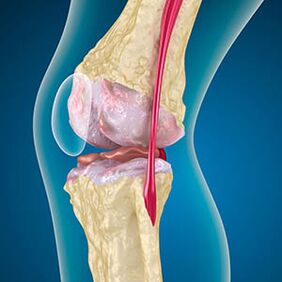
Swelling is caused by soft tissue injury, inflammation of tendons and joint capsules.Warmth and swelling in the knee area indicate accumulation of inflammatory exudate -Arthropathy is often accompanied by bursitis, synovitis, and tendonitis.
Knee tightening may be painless or traumatic.Cracking and other sounds do not indicate that the bone is wearing down.Signs of Knee Instability -Weakness in one of the muscles that control movement.
Crepitus, caused by bone-on-bone friction, does not occur at the beginning and end of the range of motion, but in the middle,Even if the joint is passively flexed.Joint locking is caused by the wear and tear of cartilage and tendons, creating a sensation of being locked in place.During any movement, bones are controlled by muscles.Their untimely contraction can cause a change in the direction of bone movement, creating a blockage.
Level 1
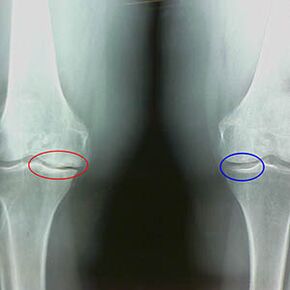
Using X-rays to determine the extent of joint disease, revealing the involvement of bone structures in pathological processes.Their changes indicate that the muscular system has been out of balance for 5-10 years.Generally speaking, peopleSuffering from lingering pain for years.
In the first stage of arthrosisIt was discovered by chance that there was a slight bone spur growth.The growth occurs where the joint is most unstable.Typically, patients experience little pain or discomfort during exercise.
Weakness in some muscles can be compensated by the function of other muscles without causing severe spasms and overload.Running and weight training can put stress on weak muscles, triggering symptoms.Muscle weakness (hypotonia) is associated with impaired blood supply and innervation.
2 degrees
The second stage of arthrosis is considered mild.X-rays show obvious bone spurs, but the cartilage is not affected.The amount of synovial fluid is reduced, but pain symptoms occur after long-term walking and running, joint stiffness, and pain when bending over.
Early radiographic symptoms of second stage of knee arthropathy:
- The tip of the interepicondylar tubercle of the tibia, to which the cruciate ligament attaches;
- medial joint space narrowing;
- Sharp edge of the medial condyle, less commonly on the lateral side - depending on the development of valgus or varus deformity of the joint.
According to Larson, the second phaseIt is characterized by a reduction in joint space of more than 50%, but this can only be examined in dynamics or compared to unaffected joints.
3 degrees
Arthropathy stage threePain when bending and straightening the joint becomes constant.When the condition worsens, the joints will become red and swollen, and the pain will not stop even at rest.There is swelling around the knee and significant deformation of the joint contour.
Signs of stage III moderate arthropathy of the knee:
- The joint space is significantly narrowed;
- Subchondral sclerosis is present in the loaded area;
- There are numerous osteophytes at the edges;
- Subchondral cysts occur rarely;
- synovitis, Baker's cyst under the knee;
- Uneven surfaces of the femur and tibia, loss of joint consistency;
- Changes in the shape of the patella;
- Calcification and chondromalacia;
Rarely, stage IV is associated with necrotizing lesions.Why is joint disease dangerous?The disease impairs mobility and creates dependence on others.
diagnosis
The podiatrist checks for signs of swelling, palpates the joint for tenderness, and checks active and passive range of motion.Be sure to check your lumbar spine becauseThis is where the nerves that provide function to the thigh muscles pass.
X-rays show the presence of osteophytes, changes in the space between the femur and tibia that indicate loss of knee cartilage.Sometimes, X-rays of the knee joint show obvious signs of cartilage wear, but the patient does not experience significant pain.In contrast, stage 1 arthropathy impairs knee joint function, because the cause of pain is low muscle tone.
If the X-ray does not show significant changes, thenDoctor orders MRI of knee and lumbar area.Diagnosis can look at ligaments, tendons, muscles, and menisci to look for other sources of pain.
Laboratory diagnosis is necessaryIf you suspect a joint infection or gout.
treat
Treatment of joint disease must be comprehensiveTarget the cause of the disease.Endocrine dysfunction that may affect connective tissue requires appropriate treatment.Recommended for overweight patientsShift to proper nutrition.Exacerbations can be alleviated with the help of medications.
drug treatment
Medication treatments for pain includePrescribe anti-inflammatory drugs.Long-term use of NSAIDsNegatively affects gastric function.
Treatment options include chondroprotectants, which are only helpful if taken long-term.3-6 months.Pharmacies offer a wide range of these medications.
It is believed that the components of these drugs aid in the regeneration of cartilage structures and have analgesic properties.
There are few controlled studies, they involve complex treatments—arthroplasty, physical therapy, diet.
attention!Chondroprotectants are taken in courses - you can take one drug for one course and another drug for a second course and compare the effects.However, uncontrolled drug use is not a good idea.Please consult your doctor before starting to take the medication.
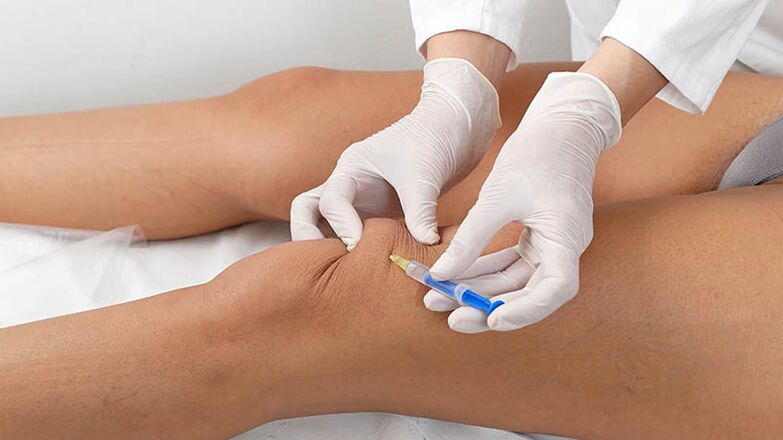
How and what to use to relieve pain and swelling?Intra-articular injections are more popular:
- steroid drugsSuppresses inflammatory responses at the immune cell level, relieving acute pain, joint stiffness and swelling.
- hyaluronic acidIncrease the viscosity of synovial fluid and reduce friction on joint surfaces.
Important!The effects of the drug last for 6-12 months, but the degeneration process does not stop.
surgical treatment
If the medication is not effective, the patient undergoes an arthroscopy– A minimally invasive procedure to remove bone growth and repair joints.If necessary, the surgeon performs plastic surgery on the ligaments and cartilage and removes areas of worn tissue.
The purpose of an osteotomy is to change the axis of load on the joint.Doctors cut into the femur or tibia to change where the joint surfaces meet.This surgery is usually performed on younger patients.
Total knee replacement or joint replacement surgeryRequired in severe stages of arthrosis (third or fourth degree).Surgical treatment does not always solve the problem, as it requires diligent daily rehabilitation and muscle strengthening.
Changes in the knee can compensate for the pelvis, so without restoring muscle balance, the hip is the next to be affected.
physical therapy
In a physical therapy setting, mud application, phonotherapy, and magnetic therapy are used.The role of external factors is toStimulates blood supply and tissue regeneration, relieving inflammation and swelling.
Treatment with traditional and non-traditional methods
Folk remedies for treating knee arthritis at home are oftenDesigned to relieve swelling and eliminate pain.Most commonly it uses horseradish leaves and potato pulp, sometimes mixed with honey and vodka for a compress.
Degeneration cannot be completely stopped.You can use celery juice to affect kidney metabolism.The kidneys are connected to the iliopsoas muscle, which is associated with hip pathology.Normalizing gallbladder and liver function can improve knee condition.
Traditional medical treatments for early stage knee joint disease include anti-inflammatory herbal decoctions:Chamomile, St. John's Wort, Helichrysum.Use a liniment made of dry mustard, sea salt and kerosene.Make a bath using magnesium salts and pine infusion.
Manual therapy and massage
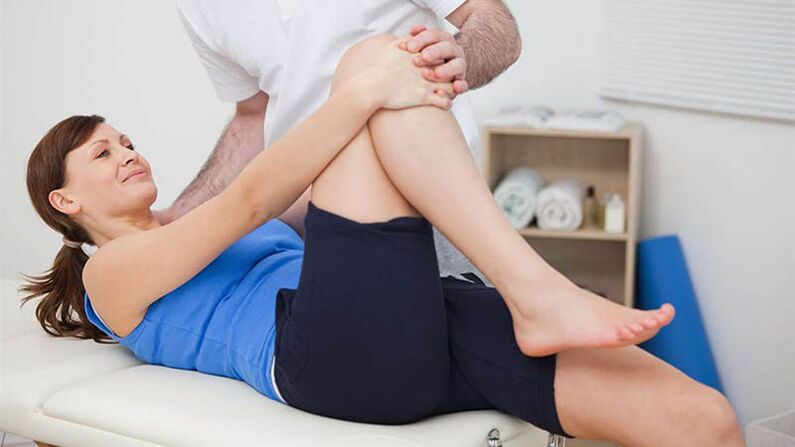
Manual treatment of knee osteoarthritis helps, if an expert understands muscle tone imbalances.Muscle testing can help find weak muscles that stabilize the knee, determine the cause of dysfunction, and correct it.
The source can not only be joint blocks in the waist,There are also dysfunctions in the blood supply, internal organs, endocrine and biochemical disorders.Therefore, chiropractors must have osteopathic and applied kinesiology skills to influence many factors.
Massage as an adjunct to manual therapy and self-help.People with knee arthritis can independently stretch the muscles and tendons that control limb movement:
- The area around the gluteus maximus muscle;
- Line along the front surface of the thigh - from pelvis to patella;
- lateral surface of thigh from greater trochanter to femoral condyle;
- Inguinal area along inguinal ligament;
- Inner surface of the thigh (line along the adductor canal).
The massage is performed through acupressure and does not require much pressure.
therapeutic gymnastics
Arthropathy is caused by problems in the lower back, pelvis, and abdominal cavity that lead to muscle weakness.Seniors do exercises to prevent arthritis and knee arthritisCan be used to increase strength, but not tone.
Complete biomechanical recovery is difficult to achieve without using manual therapy to address the factors that weaken them.Yoga further deprives joints of stability.Among treatments, it is best to give priority toPilates and Nordic Walking.
diet
Nutritional adjustments are primarily intended to combat excess weight.It’s important to give up sugar and simple carbohydrates, to prevent knee arthritis, add foods containing fiber, magnesium, B vitamins and calcium, which are important for muscle activity.try itEliminate dairy, as almost 80% of the population is lactose intolerant.
Prevent knee arthritis

Trying to build muscle through exercise doesn't always help., because innervation and blood supply have not yet been restored.The function of the thigh muscles depends on the lumbar plexus.
Changes in the lower back related to weak abdominal muscles can also affect the knees.Therefore, arthropathy is more common in men with a "beer belly", just as in women after polyhydramnios, weakness of the abdominal wall muscles occurs with multiple deliveries.
Surgery in the pelvic area and internal organs can create adhesions affecting the lumbar spine and disrupt the innervation of the muscles around the knee.
Which doctor should I consult for knee arthritis?An orthopedic surgeon will help make a diagnosis, who would insist on surgery.The work of the multidisciplinary team at the rehabilitation center achieves the best results.
The best things you can do for your joints:Eat right, watch your weight, walk more, and see a massage therapist or osteopath every three months.
Comments about treatment
Positive reviews can only be achieved with comprehensive treatment of knee deforming arthropathy or knee arthropathy.Anesthesia and intra-articular injections work temporarily to suppress the natural inflammatory response.
in conclusion
The problem with arthrosis is that medication only temporarily eliminates the pain syndrome.The cause remains unknown and unaffected.An occupational therapist can help teach you how to live with your knee condition and how to use crutches properly.But this service is only available in private clinics that offer rehabilitation services.